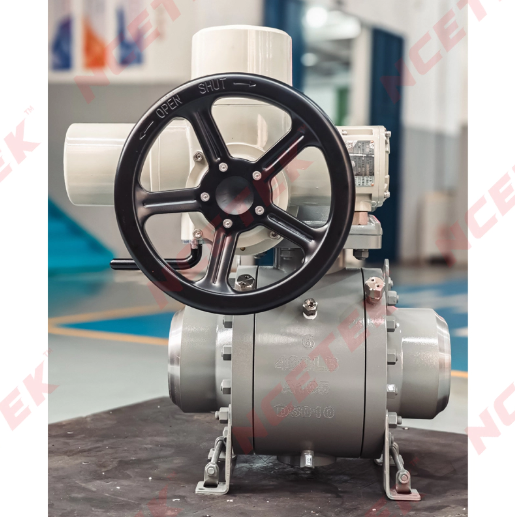
Industrial pipeline systems depend on reliable flow control equipment to regulate the movement of liquids and gases under different operating conditions. A Ball Valve Factory plays an important role in this supply chain by combining engineering design, material processing, machining, assembly, and inspection to produce valves suitable for industrial applications. Understanding how these manufacturing stages work helps project engineers, procurement teams, and distributors evaluate product quality and select equipment that matches their operational requirements.
The manufacturing process begins with understanding the intended application. Pipeline pressure, operating temperature, fluid composition, flow characteristics, installation conditions, and maintenance requirements all influence valve design. A valve intended for ordinary water distribution may have different material and sealing requirements from one used in petroleum transportation or chemical processing. Manufacturers therefore need to consider the operating environment before determining the appropriate construction, connection type, and internal components.
Material selection is one of the most important considerations in industrial valve production. Carbon steel is commonly considered for general industrial pipelines where mechanical strength and service conditions are suitable. Stainless steel may be selected when corrosion resistance is an important requirement, while alloy steel and heat-resistant materials can be considered for more demanding temperature or mechanical conditions. The selection should account for the actual medium, pressure, temperature, and applicable project specifications rather than relying on material categories alone.
The main components of a ball valve generally include the body, ball, stem, seats, seals, and operating mechanism. The ball contains a passage that allows fluid to flow when aligned with the pipeline. Rotating the ball approximately a quarter turn changes the passage orientation and controls whether the valve is open or closed. This straightforward operating principle makes ball valves useful in applications requiring relatively quick shutoff and compact operation.
Manufacturing accuracy directly affects the interaction between these components. Body machining must maintain the dimensional relationships required for correct assembly, while the ball surface and seating areas need suitable finishing to support sealing performance. Stem dimensions, connection interfaces, and sealing grooves also require appropriate manufacturing controls. Inadequate machining accuracy can lead to assembly difficulties, uneven contact, increased operating torque, or leakage.
Different manufacturing processes may be used depending on the valve design. Cast components can provide practical solutions for complex body geometries, while forged components are considered when the design requires particular material integrity and mechanical characteristics. After casting or forging, components may undergo machining, heat treatment where specified, surface preparation, and dimensional inspection. The appropriate process depends on the product configuration and engineering requirements.
Sealing technology is another important factor. Soft-seated designs commonly use polymeric or other nonmetallic seat materials selected according to temperature, pressure, and chemical compatibility. Metal-seated configurations use engineered metal contact surfaces and may be considered for applications involving elevated temperatures, abrasive media, or other challenging conditions. Neither arrangement is universally suitable for every service. Engineers must evaluate leakage requirements, operating cycles, fluid characteristics, and maintenance expectations when selecting a sealing structure.
Quality control should be integrated throughout production rather than limited to the final inspection stage. Incoming material verification helps confirm that supplied materials correspond to purchasing specifications. Dimensional inspections assess machining accuracy, while assembly checks identify possible component interference or incorrect installation. Depending on the design and applicable standards, finished valves may undergo shell testing, seat leakage testing, and operational testing. Inspection procedures should be established according to the relevant product specification and customer requirements.
International standards provide a framework for consistent industrial valve design and evaluation. Depending on the product and application, relevant requirements may include API and ASME standards, together with applicable material, inspection, and testing specifications. Manufacturers should clearly identify which standards apply to a particular design. Compliance should not be assumed simply because a valve belongs to a general product category.
The supply process also requires attention to traceability and documentation. Industrial buyers may need material records, dimensional reports, pressure test documentation, product identification, and inspection records. These documents help project teams verify that supplied equipment corresponds to the approved technical requirements. For large pipeline projects, consistent documentation can also simplify installation planning, maintenance management, and future procurement.
Application conditions should guide the final purchasing decision. Oil and gas pipelines may require attention to pressure containment, shutoff reliability, and compatibility with transported fluids. Chemical processing facilities often prioritize corrosion resistance and sealing material compatibility. Power generation and heating systems may involve elevated temperatures, thermal cycling, and specific installation constraints. Municipal infrastructure projects may place greater emphasis on service life, ease of maintenance, and compatibility with existing pipeline connections.
Buyers should also evaluate manufacturing capacity, engineering communication, inspection arrangements, and delivery coordination. A technically suitable product is only one part of a successful procurement decision. Clear communication about drawings, materials, operating conditions, and project documentation helps reduce misunderstandings during production. Zhejiang Naishi Valve Co., Ltd. provides industrial valve products under the NCETEK and Naishi Valve brands, supporting different flow control requirements according to product design and project specifications.
Choosing an experienced Ball Valve Factory requires a balanced assessment of engineering capability, manufacturing processes, material control, and inspection practices. Rather than evaluating products solely by appearance or price, industrial buyers should examine whether the proposed design matches the actual operating environment and applicable standards. For further information about industrial valve products and available configurations, visit https://www.ncevalve.com/product/.