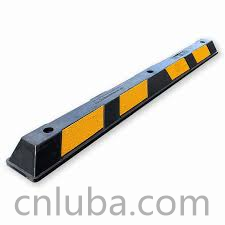
Managing vehicle speed is an important part of maintaining safe and organized traffic environments. In residential communities, commercial parking areas, industrial facilities, and private access roads, excessive speed can increase the risk of accidents involving pedestrians, vehicles, and property. A properly designed Rubber Speed Hump provides a practical physical method of encouraging drivers to reduce speed before entering areas where careful driving is required. Unlike solutions that rely entirely on traffic signs or driver awareness, a raised road device creates a visible and physical reminder that influences vehicle movement.
Rubber is widely used in traffic safety equipment because of its flexibility, manageable weight, and adaptability to different installation environments. Compared with traditional concrete structures, rubber products can be manufactured into modular sections with consistent shapes and dimensions. This manufacturing approach makes transportation and installation more convenient, particularly for projects that require multiple traffic calming points. Recycled rubber materials may also be incorporated into production, depending on the manufacturer's material specifications and environmental requirements.
The material selection process directly affects the durability and practical performance of road safety equipment. Rubber compounds should be selected according to the expected vehicle loads, outdoor exposure, temperature changes, and frequency of use. A suitable formulation helps the product maintain its physical structure under repeated vehicle contact. Resistance to moisture, ultraviolet exposure, and ordinary environmental aging is also important for installations in uncovered areas. Manufacturers should maintain consistent material mixing, molding conditions, and dimensional inspections to reduce differences between individual modules.
The structure of modular traffic calming equipment generally includes a raised profile, connection points, and a surface designed to provide visible driving guidance. The height and shape influence how vehicles approach and cross the installation. A gradual profile helps create a controlled transition rather than an abrupt obstacle. Depending on the application, the surface may incorporate raised patterns or textured sections to support tire contact and improve visibility. These structural details should be evaluated together because the product must balance traffic control requirements with practical driving conditions.
Visibility is another important consideration. Road safety equipment is often installed in locations where drivers need sufficient time to recognize a change in road conditions. Bright surface colors and contrasting markings can make a raised device easier to identify during daylight and under suitable artificial lighting. Reflective elements may provide additional visual guidance in low-light environments. Their effectiveness depends on correct positioning, maintenance, and the surrounding lighting conditions. For facilities with regular nighttime vehicle movement, visibility should be included in the initial product selection process.
The working principle is based on changing the road surface profile at a designated point. When drivers approach the raised section, the altered driving surface encourages them to reduce speed to cross it comfortably. This can help establish more consistent vehicle movement around pedestrian crossings, building entrances, loading areas, and internal roads. The equipment does not replace traffic regulations or responsible driving practices. Instead, it serves as one component of a broader traffic management system that may also include signs, road markings, pedestrian walkways, and access controls.
Typical applications include shopping center parking lots, apartment complexes, schools, hospitals, warehouses, factories, and logistics facilities. In these locations, vehicles may share limited space with pedestrians, cyclists, delivery personnel, and service vehicles. Installing a Rubber Speed Hump at an appropriate location can help establish a clear speed control point before vehicles reach a busy entrance or pedestrian activity area. Project planners should consider traffic direction, vehicle categories, emergency access requirements, drainage conditions, and local road safety regulations before determining installation positions.
Installation quality has a direct influence on long-term use. The road surface should be inspected before installation to identify loose materials, significant cracks, uneven areas, or drainage problems. Mounting hardware must be compatible with the product design and the underlying pavement. Modular sections should be aligned correctly, with connections secured according to the manufacturer's installation instructions. On frequently used roads, installers should also consider whether the equipment may interfere with snow removal, cleaning operations, or other routine maintenance activities.
Regular inspection helps identify loose fasteners, surface damage, missing reflective components, and changes in alignment. Cleaning is generally straightforward, but maintenance procedures should follow the material manufacturer's recommendations. If a section becomes damaged, replacement of the affected module may be possible without removing the entire installation, depending on the product's connection design. Facility managers should establish inspection intervals based on vehicle frequency, loading conditions, weather exposure, and the importance of the surrounding traffic area.
For international B2B buyers, purchasing decisions should consider more than the initial product price. Material composition, manufacturing consistency, structural design, mounting methods, packaging, and availability of replacement sections all influence the suitability of a supplier. Buyers should request technical drawings, installation instructions, material information, and relevant quality documentation when evaluating products for a project. They should also confirm whether the supplier can provide consistent product specifications across repeat orders, especially when equipment will be installed at multiple locations.
For distributors, contractors, and infrastructure procurement companies, dependable supply arrangements and clear product communication are equally important. Products should be packaged to reduce damage during transportation and organized for convenient handling at the installation site. Suppliers with experience in road safety equipment can help buyers compare different configurations according to project requirements. Zhejiang Luba Traffic Technology Co.,Ltd. provides traffic safety products and road infrastructure solutions for different commercial and public environments. Buyers can explore its product range through https://www.cnluba.com/product/ when evaluating equipment for traffic organization, vehicle speed management, and parking facility safety.