Understanding PVC Gloves: A Practical Option for Static-Sensitive Environments
When electronic components, precision instruments, or sensitive materials are involved, even a tiny static discharge can cause real damage. That's why glove selection in ind... moreUnderstanding PVC Gloves: A Practical Option for Static-Sensitive Environments
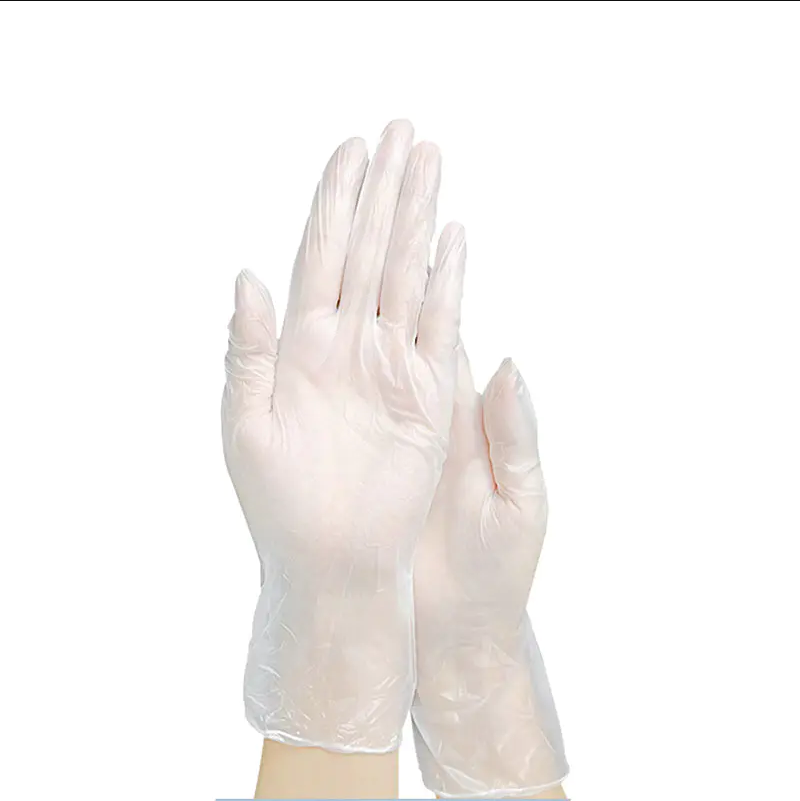
When electronic components, precision instruments, or sensitive materials are involved, even a tiny static discharge can cause real damage. That's why glove selection in industrial settings isn't just about hand protection — it's also about protecting whatever you're handling. <a href="https://www.jejorclean.com/product/antistatic-gloves/pvc-gloves.html" target="_blank">PVC gloves</a>, made from polyvinyl chloride, have earned a solid reputation as a dependable, budget-conscious solution for exactly this kind of work.
Anti-Static Performance at the Core
The defining trait of PVC gloves is their ability to help control static build-up. In settings where operators handle sensitive electronic parts — think semiconductor production, hard drive assembly, precision optics, or PCB printing — an uncontrolled static discharge can ruin a component in an instant. PVC gloves are designed specifically to reduce that risk, making them a standard choice across electronics manufacturing.
Not Just Anti-Static: Chemical and Wear Resistance Too
What sets PVC apart from some other glove materials is its resistance to acidic and alkaline substances. This chemical resistance, paired with solid wear resistance, means PVC gloves hold up well in environments involving light chemical exposure or repeated handling of rough materials — not just clean, static-controlled rooms.
Comfortable Enough for Long Shifts
A glove that's technically protective but uncomfortable to wear all day isn't much of a solution. PVC gloves are generally designed with natural hand movement in mind, offering enough flexibility that workers can wear them for extended periods without significant fatigue — an underrated but important factor for productivity on the floor.
Cost-Effective for Bulk Industrial Use
Because PVC is a relatively inexpensive raw material to produce, gloves made from it tend to be more budget-friendly than many alternatives. For companies that go through gloves in large volumes — a common reality in manufacturing and cleanroom operations — that cost advantage adds up quickly without forcing a compromise on basic protective performance.
Common Specifications
Material: PVC (polyvinyl chloride)
Color: Clear
Length options: 9" or 12"
Sizes: S, M, L
Typical packaging: 100 pieces per bag, 10 bags per carton
Where They're Typically Used
PVC gloves show up across a wide range of controlled and industrial environments, including:
Cleanrooms and purification workshops
Semiconductor and hard disk manufacturing
Precision optics and LCD/display production
Biomedicine and precision instrument handling
PCB printing and general electronics assembly
Quality Still Matters
Not every PVC glove on the market performs the same. Manufacturing consistency — driven by things like automated cutting equipment, cleanroom-grade production facilities (ISO Class 5/6, for example), and proper testing protocols — has a real effect on how reliably a glove performs batch after batch. For buyers sourcing at scale, checking out a supplier's <a href="https://www.jejorclean.com/product/antistatic-gloves/pvc-gloves.html" target="_blank">full product specifications and certifications</a> is worth the extra diligence before placing a bulk order.
Bottom Line
PVC gloves offer a practical combination that's hard to beat for the price: reliable anti-static protection, decent chemical and wear resistance, comfortable extended wear, and a cost structure that makes sense for high-volume industrial use. They're not a niche specialty product — they're a workhorse choice that continues to hold up across electronics, chemical, and precision manufacturing environments. less
Inside the Cleanroom Supply Chain: How Contamination Control Products Are Made
Most people never think about what it takes to keep a semiconductor fabrication line, a hospital lab, or a precision optics workshop free of dust and static. Yet behind ever... moreInside the Cleanroom Supply Chain: How Contamination Control Products Are Made
Most people never think about what it takes to keep a semiconductor fabrication line, a hospital lab, or a precision optics workshop free of dust and static. Yet behind every clean surface in these environments sits a surprisingly specialised supply chain — one built around fibre science, automated manufacturing, and strict certification standards. Here's a closer look at what actually goes into producing cleanroom and anti-static consumables, and why the details matter more than they might seem.
More Than "Just a Wipe"
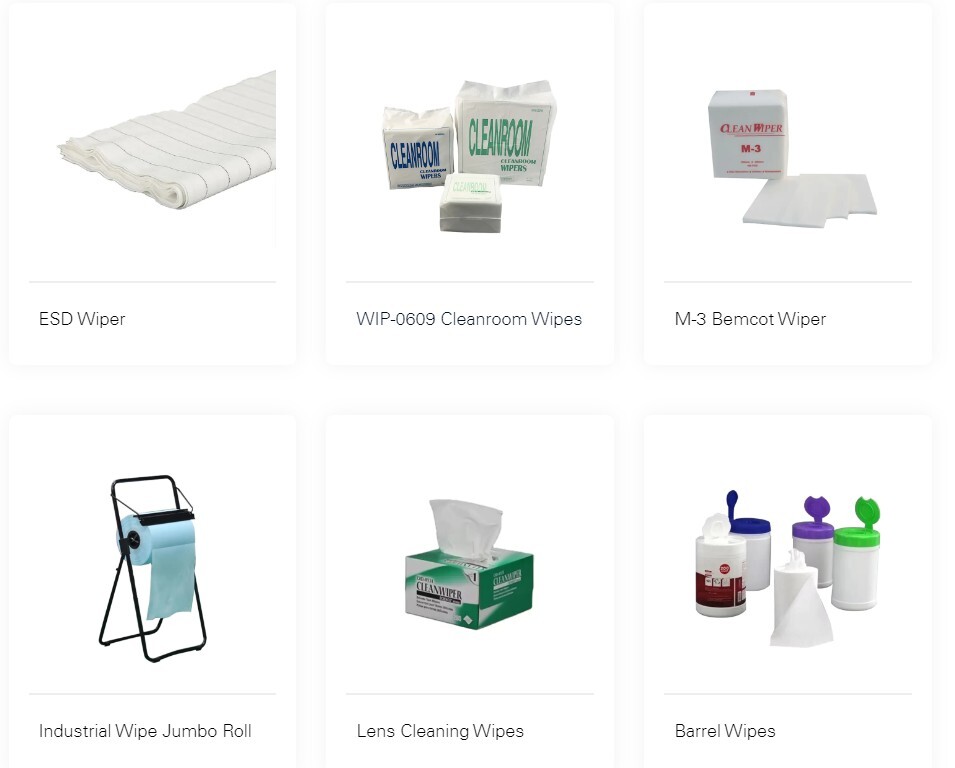
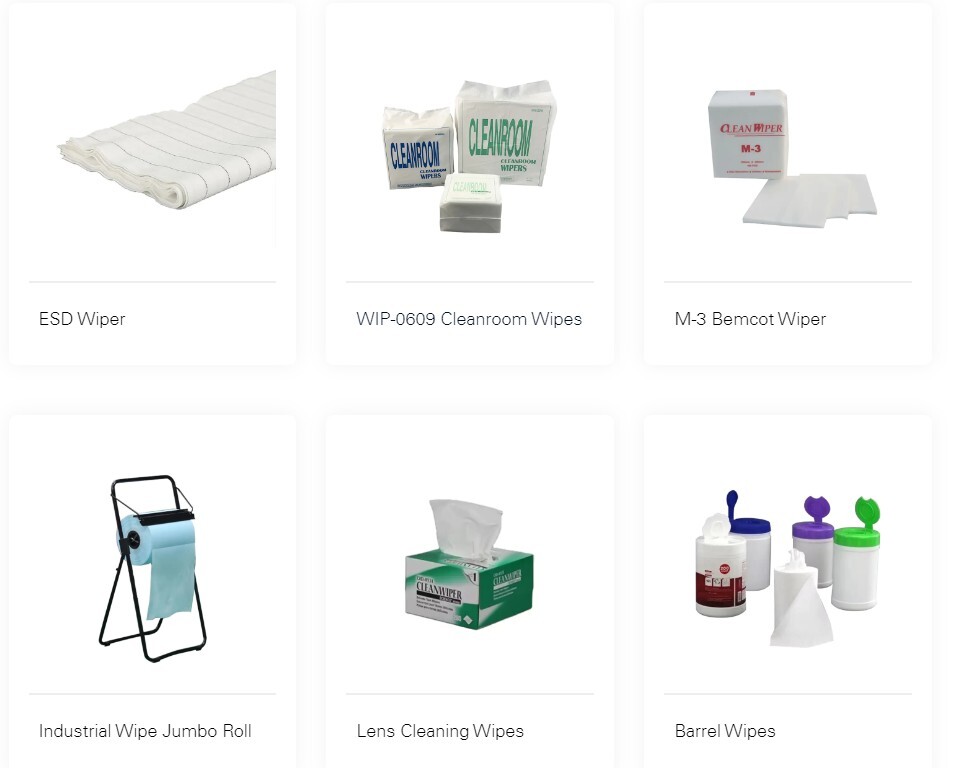
The term "cleanroom wipe" covers a surprisingly wide product family. There are general-purpose cleanroom wipers, lint-free swabs, nonwoven wipes, sticky mats and rollers for trapping floor-level particulates, shoe covers, and face masks. Specialised variants exist for nearly every niche application: lens cleaning wipes for optics, SMT stencil wiper rolls for electronics assembly, industrial jumbo wipe rolls for large-scale surface cleaning, and heavy-duty or meltblown wipes for tougher industrial contexts.
Alongside these sit anti-static (ESD) products — clothing, footwear, caps, gloves, mats, and tweezers — all designed to prevent static discharge from damaging sensitive electronic components during manufacturing and handling.
The Fibre Science Behind Contamination Control
What separates a genuinely effective cleanroom wipe from an ordinary one comes down to fibre structure. Products made from microfibres or ultrafine fibre substrates absorb more liquid while releasing far fewer loose particles during use. This matters enormously in environments like electronics fabrication, medical device assembly, and laboratory research, where a single stray fibre or particle can compromise a batch of product or skew test results.
Manufacturers pursuing this level of performance typically design their fibre substrates specifically to avoid leaving residues or introducing secondary contamination — a small technical detail with outsized consequences downstream.
What Certified Manufacturing Actually Looks Like
Producing consistent, contamination-safe products at scale requires serious infrastructure. In well-run facilities, this generally includes:
Cleanroom manufacturing spaces built and certified to recognised standards, such as ISO Class 5 or Class 6
Independent certification bodies (NEBB certification is one example used in this industry) verifying that cleanroom conditions meet stated classifications
Automated production lines for weaving, washing, and shaping materials, reducing human-introduced variability
Precision cutting technology, including laser and ultrasonic cutting equipment
Advanced quality-testing instruments, such as infrared spectrometers and liquid particle counters, used to verify that finished products meet particle-release and absorbency specifications
Facilities that combine all of these elements are typically able to scale production significantly — sometimes by an order of magnitude — while maintaining consistent quality across batches.
Matching the Right Product to the Right Environment
Not every cleanroom application has the same requirements, which is why product selection matters as much as manufacturing quality:
Electronics environments generally benefit from fine-fibre wipes capable of capturing microscopic dust without leaving contact residue on circuitry or components.
Medical and laboratory settings often prioritise practical packaging formats, such as bucket-dispensed wipes, suited to frequent, high-volume daily cleaning.
Optical and lens-cleaning applications require wipes engineered specifically to avoid micro-scratching delicate surfaces.
Buyers and specifiers are generally advised to confirm ISO 5 or ISO 6 certification status directly with suppliers, rather than assuming compliance based on product marketing alone.
Where the Industry Is Headed
A few clear trends are shaping the next generation of cleanroom and ESD products:
Advanced materials — continued development of high-performance ultrafine fibres for better absorbency, durability, and lower particle shedding
Sustainability pressure — growing adoption of eco-friendly materials and energy-efficient manufacturing to reduce the sector's environmental footprint
Smart monitoring — increasing integration of real-time environmental monitoring systems, allowing cleanroom conditions to be tracked and adjusted continuously rather than checked periodically
Closing Thoughts
Contamination control might be invisible to most consumers, but it's foundational to industries where precision and cleanliness directly determine product safety and performance. As certification standards tighten and sustainability expectations grow, the manufacturers who invest in fibre science, automated quality control, and verified certifications will be the ones best equipped to meet the industry's evolving demands. less
Suzhou Jujie Electron Co.,Ltd is a China OEM Cleanroom Product Series suppliers and ODM Cleanroom Product Series company, Professional custom Cleanroom Product Series export sale.
In industrial and commercial settings, the selection of cleaning materials directly impacts operational efficiency, workplace safety, and compliance with hygiene standards. Heavy duty wipes have emerged as an essential tool across manufacturing floors, cl... moreIn industrial and commercial settings, the selection of cleaning materials directly impacts operational efficiency, workplace safety, and compliance with hygiene standards. Heavy duty wipes have emerged as an essential tool across manufacturing floors, cleanrooms, laboratories, and maintenance workshops. This article examines the key characteristics of industrial-grade nonwoven wipes and their role in supporting rigorous cleaning protocols.
Material Composition and Performance Characteristics
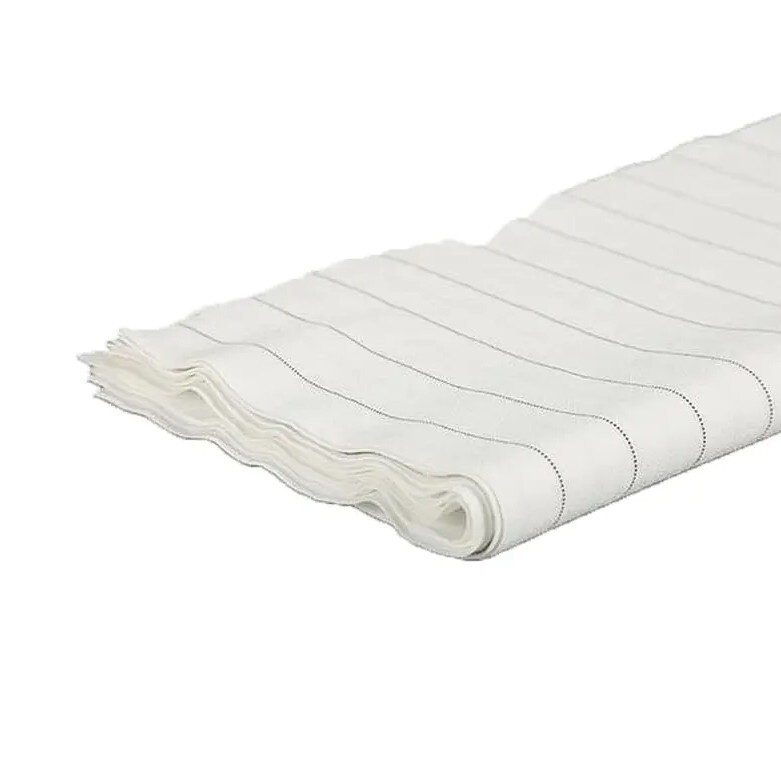
Heavy duty wipes are manufactured from advanced nonwoven fabrics engineered to deliver consistent performance under demanding conditions. Unlike conventional paper towels or cloth rags, industrial nonwoven wipes are designed with controlled fiber structures that optimize absorbency, tensile strength, and chemical resistance.
The primary performance attributes of these wipes include rapid liquid and grease absorption, which helps maintain dry work surfaces and reduces slip hazards. Their high tensile strength allows them to withstand intensive scrubbing without tearing or shredding, a critical factor in environments where equipment surfaces require thorough decontamination. Additionally, the low-lint construction ensures minimal particulate release, making these wipes suitable for precision environments where contamination control is paramount.
Application Environments
The versatility of heavy duty wipes extends across multiple sectors where cleaning standards are non-negotiable. In industrial production facilities, these wipes address oil spills, liquid leaks, and surface contaminants on machinery and production lines. Their ability to absorb hydrocarbons and aqueous solutions alike makes them a practical choice for mixed-contaminant environments.
Cleanrooms represent another critical application area. The particle-free characteristics of high-quality nonwoven wipes align with stringent contamination control requirements in semiconductor manufacturing, pharmaceutical production, and aerospace assembly. In these settings, even microscopic lint can compromise product integrity, making material selection a matter of regulatory compliance.
Laboratories benefit from the chemical-resistant properties of industrial wipes when cleaning benches, glassware, and analytical equipment. The compatibility with solvents such as isopropyl alcohol, acetone, and specialized detergents ensures that surfaces can be decontaminated without introducing new variables into sensitive experimental processes.
Automotive and machinery maintenance workshops also rely on heavy duty wipes for grease and grime removal from engines, tools, and workshop surfaces. The combination of absorbency and durability allows technicians to clean effectively without frequent replacement, improving workflow efficiency.
Industrial Production: Surface decontamination of machinery and production equipment
Cleanrooms: Compliance with ISO cleanliness standards in controlled environments
Laboratories: Chemical-resistant cleaning for experimental and analytical surfaces
Automotive Maintenance: Grease and oil removal from mechanical components
Selection Considerations for Procurement
When sourcing industrial cleaning wipes, procurement teams should evaluate several factors beyond unit cost. The intended application environment determines whether standard-duty or heavy-duty specifications are required. For environments involving aggressive chemicals or high-friction cleaning, wipes with reinforced fiber matrices offer longer service life and reduced consumption rates.
Compatibility with facility-specific cleaning protocols is equally important. Wipes that generate particles or react with solvents can introduce process deviations in regulated industries. Suppliers offering OEM and ODM customization can tailor wipe dimensions, packaging, and material formulations to align with specific operational requirements.
Key Procurement Tip: Evaluate wipes based on total cost of use rather than per-unit price. Higher-quality wipes that resist tearing and absorb more per sheet often reduce overall consumption and labor time, delivering better value over the procurement cycle.
Conclusion
Heavy duty nonwoven wipes represent a foundational component of industrial hygiene and contamination control strategies. Their engineered material properties address the dual challenges of effective cleaning and environmental compliance across diverse operational settings. As manufacturing and laboratory standards continue to tighten, the role of reliable, high-performance cleaning materials in maintaining operational integrity will only grow in significance.
For facilities evaluating their current cleaning supply chains, assessing wipe performance against specific application demands remains a prudent step toward optimizing both cleanliness outcomes and resource efficiency. less
The Invisible Guardians of Tech: How High-Quality Cleanroom Wipers Drive Precision Manufacturing
In the world of high-tech manufacturing—where semiconductor chips are fabricated and advanced LCD/OLED displays are assembled—the smallest speck of dus... moreThe Invisible Guardians of Tech: How High-Quality Cleanroom Wipers Drive Precision Manufacturing
In the world of high-tech manufacturing—where semiconductor chips are fabricated and advanced LCD/OLED displays are assembled—the smallest speck of dust can be a million-dollar disaster. As electronic components shrink to microscopic scales, maintaining an ultra-clean production environment is no longer just a preference; it is a critical requirement.
This is where specialized contamination control comes into play, led by industry pioneers like Suzhou Jujie Electron Co., Ltd. Founded in 2005, this high-tech enterprise has established itself as a premier China Cleanroom Wiper Manufacturer and Factory, acting as the "invisible guardian" behind some of the world’s most sophisticated production lines.
Why Standard Wipes Fail in High-Tech Environments
Ordinary cleaning cloths are notorious for shedding fibers and creating static electricity—two major enemies of sensitive electronics. Cleanroom wipers, however, are engineered differently.
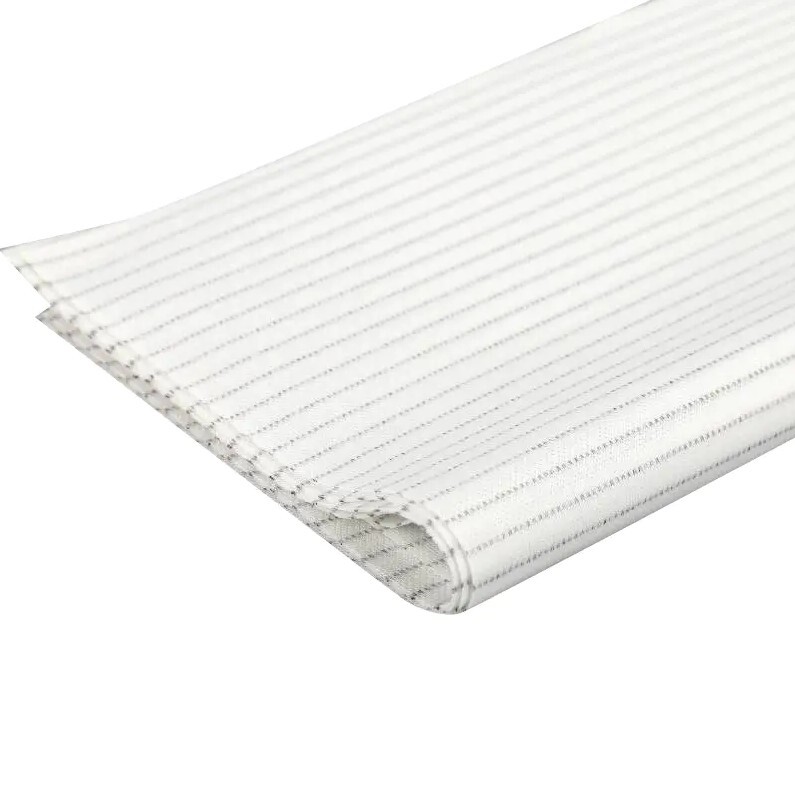
Suzhou Jujie Electronics’ professional-grade wipers utilize tightly woven microfibers that physically absorb and trap dust particles rather than merely pushing them around. For instance, high-density models like the JW-08522 and JW-09012 are proven to capture over 99% of particles as tiny as 0.1μm. Furthermore, advanced options like the JW-14061 ESD Wiper incorporate built-in conductive fibers to eliminate the "dust-static" cycle, preventing static electricity from attracting airborne contaminants or damaging fragile circuits.
Tailored Solutions for Cutting-Edge Industries
Different manufacturing stages demand different levels of cleanliness. A robust cleanroom wiper portfolio must cover diverse application scenarios:
Semiconductor Wafer Processing: Wafers require submicron-level surface cleanliness. Ultra-fine microfiber wipers (such as the JW-18043) are deployed to precisely remove photoresist residue and metal particles without altering the delicate architecture of the chips.
LCD & OLED Display Production: Large, fragile display screens require a dual-action approach. Special LCD roll wipers offer an incredibly soft texture to prevent scratching, combined with anti-static properties to keep the surface pristine.
Precision Hardware Maintenance: From servers to routers, electronic components need regular maintenance. High-end cleanroom wipes feature wet/dry dual-use properties, allowing technicians to wipe away grime quickly without leaving behind watermarks or fiber lint.
Behind the Scenes: Advanced Cleanrooms and Global Standards
The quality of a cleanroom wiper depends entirely on the environment in which it is made. To ensure absolute purity, Suzhou Jujie Electronics operates an expansive 33,000m² manufacturing plant, which includes an 8,000m² lint-free workshop. These cleanrooms are built to strict ISO Class 5 and Class 6 standards and have passed rigorous NEBB certification.
Equipped with 48 automated weaving, washing, and shaping production lines, the facility integrates cutting-edge technology—such as Japanese laser cutting machines and German infrared spectrometers—to ensure a 99.9% product consistency. Every batch undergoes exhaustive liquid particle counter monitoring and particle release testing before it ever reaches a customer’s facility.
Looking Forward
As medical, aerospace, and semiconductor industries continue to evolve, the demand for even higher contamination standards grows. Through continuous investment in "fiber refinement and surface modification" technologies, cleanroom wiper manufacturers are scaling up to meet these future challenges, ensuring that global tech innovation can proceed smoothly, one lint-free wipe at a time.
For more information on high-quality cleanroom and anti-static consumables, you can contact Suzhou Jujie Electron Co., Ltd. via [email protected] or visit their production facilities in Suzhou, Jiangsu Province, China. less
A wide variety of cleaning products--Cleanroom Wiper
$150.00
Cleanroom Wiper—also referred to as a cleanroom cloth or lint-free wiper—is a specialized cleaning product designed specifically for use in controlled environments, such as cleanrooms. Its primary function is to clean and maintain surfaces, equipment,... moreCleanroom Wiper—also referred to as a cleanroom cloth or lint-free wiper—is a specialized cleaning product designed specifically for use in controlled environments, such as cleanrooms. Its primary function is to clean and maintain surfaces, equipment, and products within a cleanroom setting without introducing additional contamination. less
Our products include anti-static clothing, anti-static shoes, dust-free cloth and dust-free paper, anti-static gloves and finger cots. Anti-static clothing is made of special materials, which can effectively prevent the generation and accumulation of stat... moreOur products include anti-static clothing, anti-static shoes, dust-free cloth and dust-free paper, anti-static gloves and finger cots. Anti-static clothing is made of special materials, which can effectively prevent the generation and accumulation of static electricity and protect personnel and products from static electricity hazards. Anti-static shoes are designed for clean rooms. They have good conductivity and wear resistance, and can prevent static electricity from being transmitted to the ground through the soles. Dust-free cloth and dust-free paper are used to wipe and clean the surface of sensitive electronic components and equipment to remove dust and stains while avoiding static electricity. Anti-static gloves and finger cots are used for precision operations to prevent static electricity generated by the hands from damaging the product. less